
 Cart is empty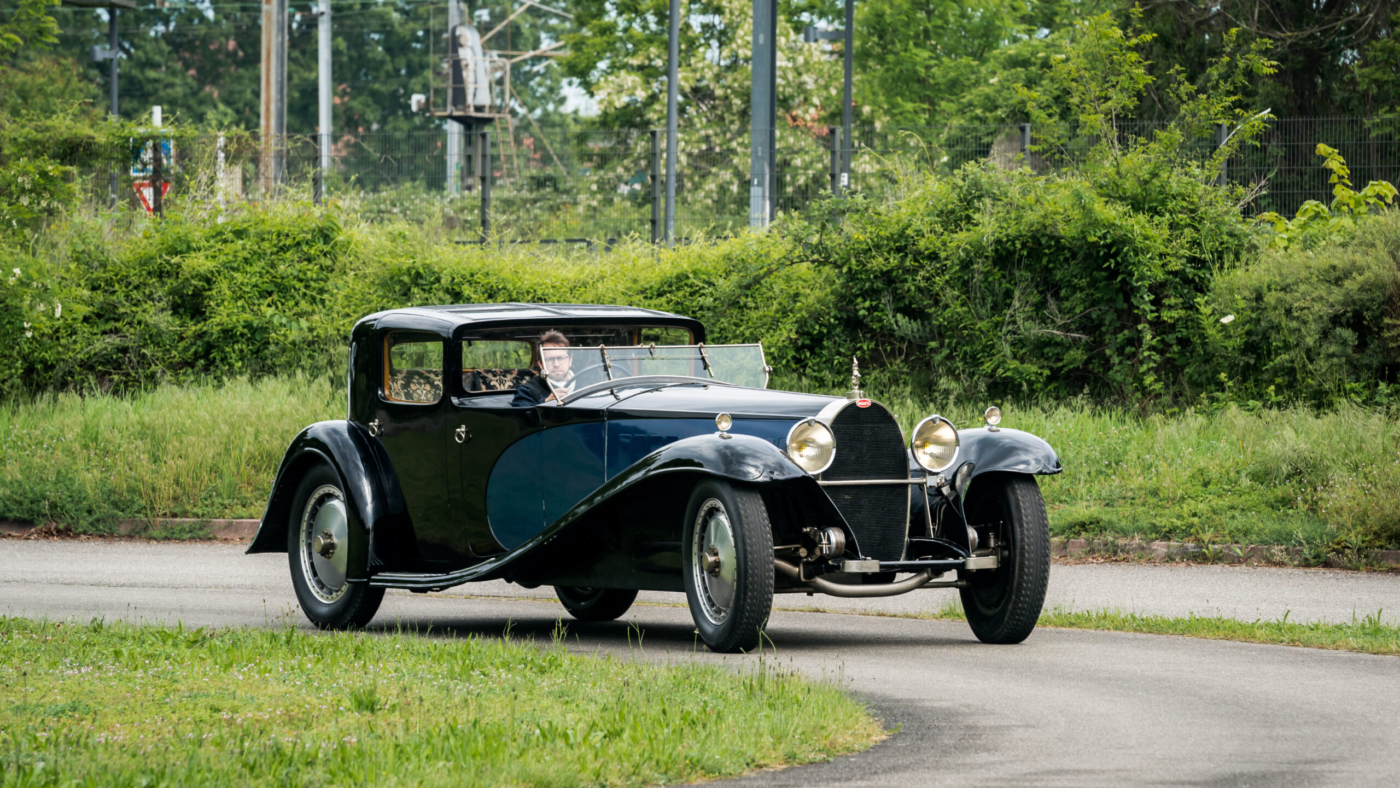
Each year, the Musée National de l’Automobile – Collection Schlumpf brings its most iconic vehicles to Top Marques Monaco, offering a unique glimpse into automotive history. From the legendary Bugatti Royale to groundbreaking innovations like the Citroën Traction Avant, this extraordinary museum not only preserves the past but inspires the future of mobility.
With over 20,000 square meters of exhibition space and a commitment to education and restoration, it stands as a global beacon for car enthusiasts and visionaries alike. As part of its mission to share its exceptional heritage with the world, the museum participates in prestigious events like Top Marques Monaco, where it showcases a handpicked selection of its most iconic vehicles. This annual presentation connects the museum with a global audience of car enthusiasts, collectors, and visionaries, offering a rare opportunity to experience the artistry and innovation that have shaped the automotive world.

Preserving the Past to Shape the Future
In a world where the automotive industry is undergoing a profound transformation—embracing electrification, digitalization, and new mobility solutions—the history of the automobile has never been more essential. Understanding today’s innovations requires a deep appreciation of yesterday’s advancements. The Musée National de l’Automobile in Mulhouse is dedicated to preserving, studying, and sharing an exceptional mechanical heritage that spans nearly a century and a half of industrial and human innovation. Through its exhibitions, restoration workshops, and global collaborations, the museum ensures that the legacy of the automobile continues to inspire future generations.


A Museum of Global Significance
This one-of-a-kind museum chronicles the evolution of the automotive industry through one of the most significant collections in existence. Originally built around the extraordinary collection assembled by the Schlumpf brothers, it has continued to grow over the decades. From the museum’s inception, 426 vehicles were classified as Historic Monuments – a rare recognition for industrial objects, underscoring their cultural and historical value. In 2002, the museum was awarded the prestigious “Musée de France” designation, ensuring the collection’s inalienable status and its enduring place in the national heritage.
Passing Down Knowledge and Skills
Beyond preservation, the museum has become a true center for knowledge transmission. It has partnered with the Alsace Chamber of Trades to offer training for the Professional Qualification Certificate in vintage and historic vehicle mechanics. Apprentices have the unique opportunity to work directly on heritage vehicles in the museum’s workshops, under the guidance of restoration experts. This hands-on approach ensures the transfer of rare technical skills and perpetuates the trades essential to preserving automotive heritage.
A Journey Through Automotive History
At the heart of the museum, the Aventure space, illuminated by nearly 800 lampposts identical to those on Paris’s Pont Alexandre III, offers a breathtaking journey through the history of the automobile. Spanning over 17,000 square meters, vehicles are displayed chronologically, allowing visitors to trace the technological and stylistic evolution of the automobile.
The “Ancestors” (1878–1918)
The journey begins with the “Ancestors,” covering the period from 1878 to 1918. Here, visitors can discover the pioneers of motorized mobility: Antoinette, Panhard, Peugeot, De Dion, and Benz. It was during this era that engineer René Panhard established a mechanical architecture—engine at the front, clutch, gearbox, and rear-wheel drive—that became the standard for decades and remains the foundation of many modern vehicles.
The “Classics” (1918–1938)
The “Classics” period marks the golden age of the European automotive industry. The merger of Mercedes and Benz gave rise to an iconic manufacturer and ushered in an era of prestigious, high-performance cars. This period also saw the emergence of major technical innovations. In 1934, Citroën revolutionized the industry with the mass production of front-wheel drive technology, which remains widely used today. At the same time, the opening of Peugeot’s Sochaux factories symbolized the rise of industrial-scale production.
The “Modern” Era (Post-1945)
After 1945, the automobile entered the “Modern” era. In a context of reconstruction and social transformation, manufacturers focused on producing lighter, more economical vehicles accessible to a broader audience. The application of Taylorist production methods democratized the automobile, turning it into an everyday object.
Celebrating Performance and Prestige
While the history of the automobile is one of mobility, it is also one of performance and dreams. The museum’s motorsport section offers a spectacular demonstration of this, featuring legendary models such as the 1908 Panhard-Levassor Biplace Course, the 1937 Mercedes W125, the 1957 Maserati 250F, and the 1963 Lotus Type 33.
Among these exceptional machines, one car stands out: the 1923 Bugatti Type 32. Designed by Ettore Bugatti, it featured revolutionary aerodynamics for its time. Nicknamed “Tank,” it is the sole surviving car from the 1923 Grand Prix de Tours and still retains its original engine.
Nearby, the Masterpieces space celebrates the most prestigious automobiles in history. Exceptional models such as the Panhard-Levassor X26, the 1949 Delahaye Type 135 coach, and the 1924 Rolls-Royce Silver Ghost showcase the refinement and craftsmanship of the great automotive houses. At the center of this space are the legendary Bugatti Royales, including the famous 1930 Bugatti Royale Type 41 Coupé Napoléon, which once belonged to Ettore Bugatti himself.


Restoration: A Blend of Art and Science
Preserving a collection of this magnitude requires exceptional expertise. The museum has its own restoration workshop, led by engineer and heritage restorer Brice Chalançon, supported by two specialized mechanics, Bertrand Heck and Timothé Quinet. Over the years, the team has developed internationally recognized scientific and technical expertise.
Restoration work can range from simple material stabilization (metals, leather, or textiles) to the complete disassembly of a vehicle for full restoration, sometimes including its return to working condition. Some interventions allow visitors to witness the precision and dedication required for these exceptional trades.
This work is carried out with scientific rigor and in accordance with the ethical standards of French museums. The workshop collaborates with numerous partners, including the University of Haute-Alsace, the National Heritage Institute, the Haute École ARC in Neuchâtel, and the Center for Research and Restoration of French Museums. Corporate sponsors such as Motul also contribute to these conservation projects.
Innovation Rooted in History
As the automotive industry prepares for a new technological revolution, the museum’s collections serve as a vital reminder: innovation is rooted in historical continuity. Every contemporary advancement – whether in aerodynamics, mechanical architecture, or energy efficiency – has its origins in the experiments of early pioneers.
By highlighting these historical milestones, the Musée National de l’Automobile does more than preserve a heritage. It fuels the imagination of engineers, designers, and enthusiasts shaping the automobiles of tomorrow. This is the story the museum strives to bring to life, reminding us that the future of the automobile is always built on its past.

Add a comment
You must be logged in to post a comment